The Hacker NewsCybersecurity researchers have disclosed details of a new Android trojan called Massiv that’s designed to facilitate device takeover (DTO) attacks for financial theft.
The malware, according to ThreatFabric, masquerades as seemingly harmless IPTV apps to deceive victims, indicating that the activity is primarily singling out users looking for the online TV applications.
“This new threat, while
Author: chouaibcher@gmail.com
-

Fake IPTV Apps Spread Massiv Android Malware Targeting Mobile Banking Users
-

CRESCENTHARVEST Campaign Targets Iran Protest Supporters With RAT Malware
The Hacker NewsCybersecurity researchers have disclosed details of a new campaign dubbed CRESCENTHARVEST, likely targeting supporters of Iran’s ongoing protests to conduct information theft and long-term espionage.
The Acronis Threat Research Unit (TRU) said it observed the activity after January 9, with the attacks designed to deliver a malicious payload that serves as a remote access trojan (RAT) and -

Citizen Lab Finds Cellebrite Tool Used on Kenyan Activist’s Phone in Police Custody
The Hacker NewsNew research from the Citizen Lab has found signs that Kenyan authorities used a commercial forensic extraction tool manufactured by Israeli company Cellebrite to break into a prominent dissident’s phone, making it the latest case of abuse of the technology targeting civil society.
The interdisciplinary research unit at the University of Toronto’s Munk School of Global Affairs & Public -
Critical Flaws Found in Four VS Code Extensions with Over 125 Million Installs
The Hacker NewsCybersecurity researchers have disclosed multiple security vulnerabilities in four popular Microsoft Visual Studio Code (VS Code) extensions that, if successfully exploited, could allow threat actors to steal local files and execute code remotely.
The extensions, which have been collectively installed more than 125 million times, are Live Server, Code Runner, Markdown Preview Enhanced, and -

Cybersecurity Tech Predictions for 2026: Operating in a World of Permanent Instability
The Hacker NewsIn 2025, navigating the digital seas still felt like a matter of direction. Organizations charted routes, watched the horizon, and adjusted course to reach safe harbors of resilience, trust, and compliance.
In 2026, the seas are no longer calm between storms. Cybersecurity now unfolds in a state of continuous atmospheric instability: AI-driven threats that adapt in real time, expanding -

Dell RecoverPoint for VMs Zero-Day CVE-2026-22769 Exploited Since Mid-2024
The Hacker NewsA maximum severity security vulnerability in Dell RecoverPoint for Virtual Machines has been exploited as a zero-day by a suspected China-nexus threat cluster dubbed UNC6201 since mid-2024, according to a new report from Google Mandiant and Google Threat Intelligence Group (GTIG).
The activity involves the exploitation of CVE-2026-22769 (CVSS score: 10.0), a case of hard-coded credentials -

3 Ways to Start Your Intelligent Workflow Program
The Hacker NewsSecurity, IT, and engineering teams today are under relentless pressure to accelerate outcomes, cut operational drag, and unlock the full potential of AI and automation. But simply investing in tools isn’t enough. 88% of AI proofs-of-concept never make it to production, even though 70% of workers cite freeing time for high-value work as the primary AI automation motivation. Real impact comes
-
Notepad++ Fixes Hijacked Update Mechanism Used to Deliver Targeted Malware
The Hacker NewsNotepad++ has released a security fix to plug gaps that were exploited by an advanced threat actor from China to hijack the software update mechanism to selectively deliver malware to targets of interest.
The version 8.9.2 update incorporates what maintainer Don Ho calls a “double lock” design that aims to make the update process “robust and effectively unexploitable.” This includes verification -
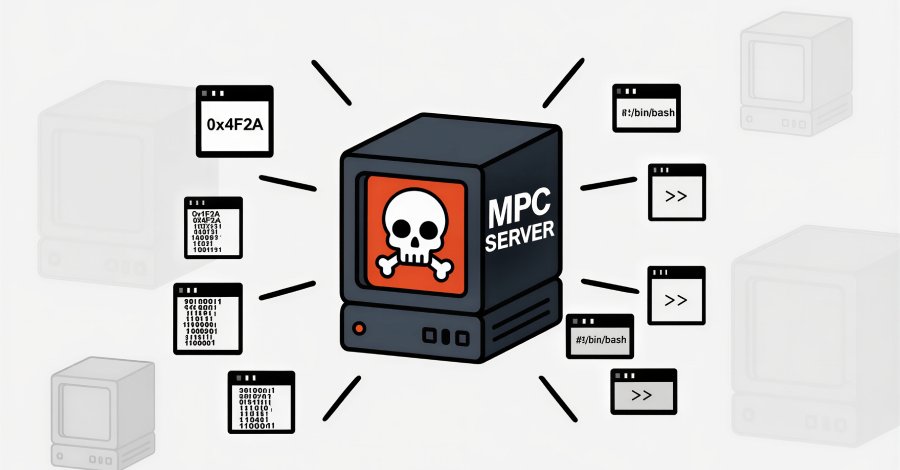
SmartLoader Attack Uses Trojanized Oura MCP Server to Deploy StealC Infostealer
The Hacker NewsCybersecurity researchers have disclosed details of a new SmartLoader campaign that involves distributing a trojanized version of a Model Context Protocol (MCP) server associated with Oura Health to deliver an information stealer known as StealC.
“The threat actors cloned a legitimate Oura MCP Server – a tool that connects AI assistants to Oura Ring health data – and built a deceptive -

Webinar: How Modern SOC Teams Use AI and Context to Investigate Cloud Breaches Faster
The Hacker NewsCloud attacks move fast — faster than most incident response teams.
In data centers, investigations had time. Teams could collect disk images, review logs, and build timelines over days. In the cloud, infrastructure is short-lived. A compromised instance can disappear in minutes. Identities rotate. Logs expire. Evidence can vanish before analysis even begins.
Cloud forensics is fundamentally