The Hacker NewsMost identity programs still prioritize work the way they prioritize IT tickets: by volume, loudness, or “what failed a control check.” That approach breaks the moment your environment stops being mostly-human and mostly-onboarded.
In modern enterprises, identity risk is created by a compound of factors: control posture, hygiene, business context, and intent. Any one of these can perhaps be
Category: news
-

Identity Prioritization isn’t a Backlog Problem – It’s a Risk Math Problem
-

Lazarus Group Uses Medusa Ransomware in Middle East and U.S. Healthcare Attacks
The Hacker NewsThe North Korea-linked Lazarus Group (aka Diamond Sleet and Pompilus) has been observed using Medusa ransomware in an attack targeting an unnamed entity in the Middle East, according to a new report by the Symantec and Carbon Black Threat Hunter Team.
Broadcom’s threat intelligence division said it also identified the same threat actors mounting an unsuccessful attack against a healthcare -

UnsolicitedBooker Targets Central Asian Telecoms With LuciDoor and MarsSnake Backdoors
The Hacker NewsThe threat activity cluster known as UnsolicitedBooker has been observed targeting telecommunications companies in Kyrgyzstan and Tajikistan, marking a shift from prior attacks aimed at Saudi Arabian entities.
The attacks involve the deployment of two distinct backdoors codenamed LuciDoor and MarsSnake, according to a report published by Positive Technologies last week.
“The group used several -

Anthropic Says Chinese AI Firms Used 16 Million Claude Queries to Copy Model
The Hacker NewsAnthropic on Monday said it identified “industrial-scale campaigns” mounted by three artificial intelligence (AI) companies, DeepSeek, Moonshot AI, and MiniMax, to illegally extract Claude’s capabilities to improve their own models.
The distillation attacks generated over 16 million exchanges with its large language model (LLM) through about 24,000 fraudulent accounts in violation of its terms -

⚡ Weekly Recap: Double-Tap Skimmers, PromptSpy AI, 30Tbps DDoS, Docker Malware & More
The Hacker NewsSecurity news rarely moves in a straight line. This week, it feels more like a series of sharp turns, some happening quietly in the background, others playing out in public view. The details are different, but the pressure points are familiar.
Across devices, cloud services, research labs, and even everyday apps, the line between normal behavior and hidden risk keeps getting thinner. Tools -
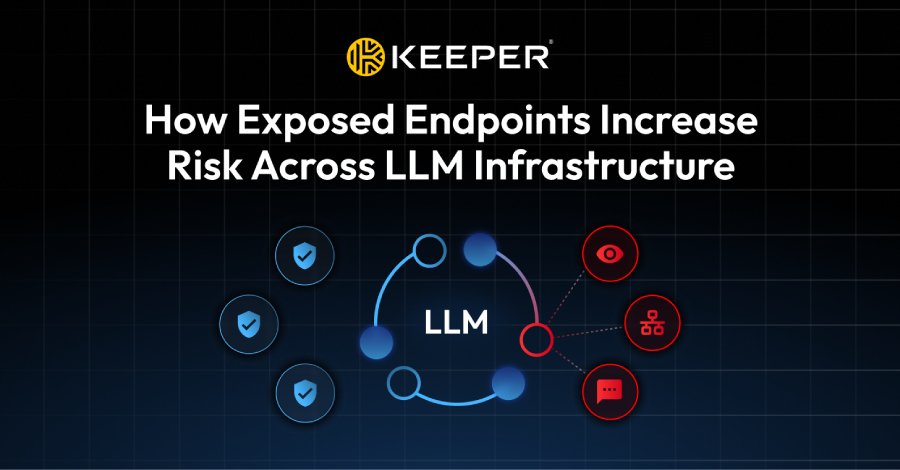
How Exposed Endpoints Increase Risk Across LLM Infrastructure
The Hacker NewsAs more organizations run their own Large Language Models (LLMs), they are also deploying more internal services and Application Programming Interfaces (APIs) to support those models. Modern security risks are being introduced less from the models themselves and more from the infrastructure that serves, connects and automates the model. Each new LLM endpoint expands the attack surface, often in
-
Malicious npm Packages Harvest Crypto Keys, CI Secrets, and API Tokens
The Hacker NewsCybersecurity researchers have disclosed what they say is an active “Shai-Hulud-like” supply chain worm campaign that has leveraged a cluster of at least 19 malicious npm packages to enable credential harvesting and cryptocurrency key theft.
The campaign has been codenamed SANDWORM_MODE by supply chain security company Socket. As with prior Shai-Hulud attack waves, the malicious code embedded -
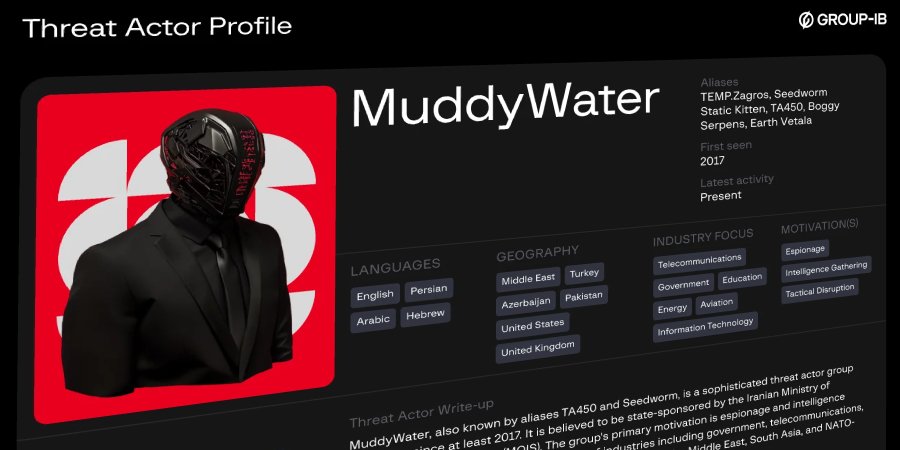
MuddyWater Targets MENA Organizations with GhostFetch, CHAR, and HTTP_VIP
The Hacker NewsThe Iranian hacking group known as MuddyWater (aka Earth Vetala, Mango Sandstorm, and MUDDYCOAST) has targeted several organizations and individuals mainly located across the Middle East and North Africa (MENA) region as part of a new campaign codenamed Operation Olalampo.
The activity, first observed on January 26, 2026, has resulted in the deployment of new malware families that share -

AI-Assisted Threat Actor Compromises 600+ FortiGate Devices in 55 Countries
The Hacker NewsA Russian-speaking, financially motivated threat actor has been observed taking advantage of commercial generative artificial intelligence (AI) services to compromise over 600 FortiGate devices located in 55 countries.
That’s according to new findings from Amazon Threat Intelligence, which said it observed the activity between January 11 and February 18, 2026.
“No exploitation of FortiGate -
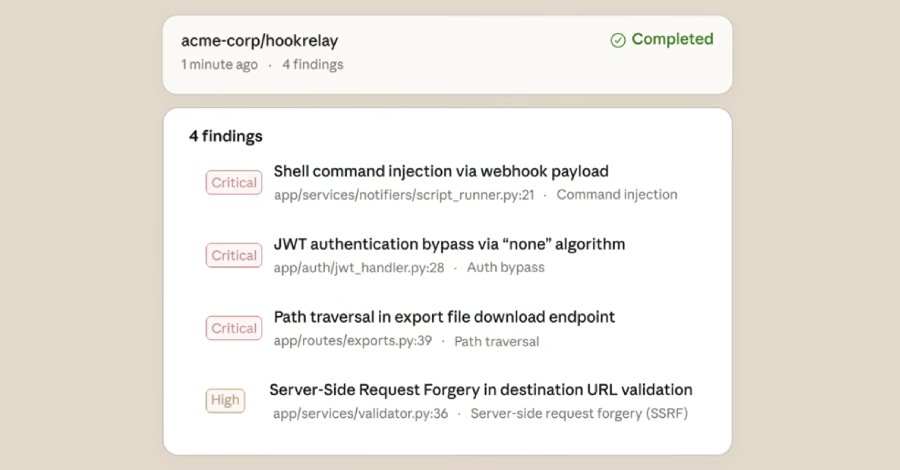
Anthropic Launches Claude Code Security for AI-Powered Vulnerability Scanning
The Hacker NewsArtificial intelligence (AI) company Anthropic has begun to roll out a new security feature for Claude Code that can scan a user’s software codebase for vulnerabilities and suggest patches.
The capability, called Claude Code Security, is currently available in a limited research preview to Enterprise and Team customers.
“It scans codebases for security vulnerabilities and suggests targeted